Sara Durán
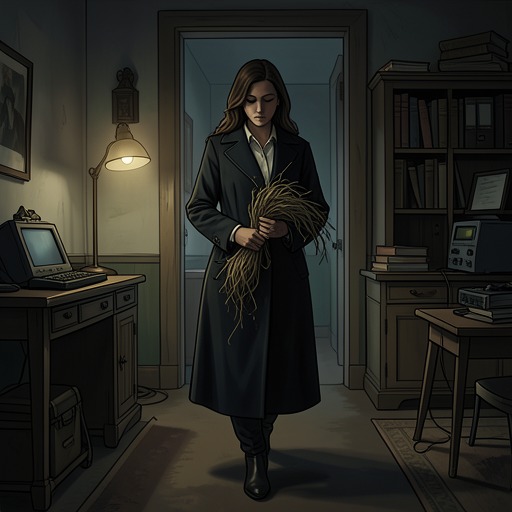
Ofrenda a la tormentaSara Durán is a long-term patient whose memories and family history become a crucial, unresolved part of Amaia Salazar’s investigation. At the clinic, Sara identifies Xabier Markina as her husband and speaks of an enduring love for him; Amaia identifies him as Sara’s son. The mismatch between those relationships, and between the clinic’s account of Sara’s child and the investigation’s discoveries about an infant sacrifice, makes Sara a point where personal memory and concealed family history meet.
Identity and Background
Sara first enters the investigation through a file Jonan Etxaide assembled on Markina. Among the judge’s biographical details, the file contains the address and telephone number of the geriatric clinic where Sara had been admitted. Etxaide marks the word mother with quotation marks, drawing attention to a relationship whose meaning is not yet clear to Amaia. The detail prompts her confusion: she cannot understand why Sara belongs in a file about Markina.
The file’s insinuation gains force only when Amaia visits the clinic. She has been told that Sara died, but a staff member says Sara has been a patient there for a long time and was alive when she was last given her medication. The discovery overturns the account Amaia had received and changes Sara from a biographical trace into a living witness, though the information available from her proves difficult to interpret.
The Clinic Encounter
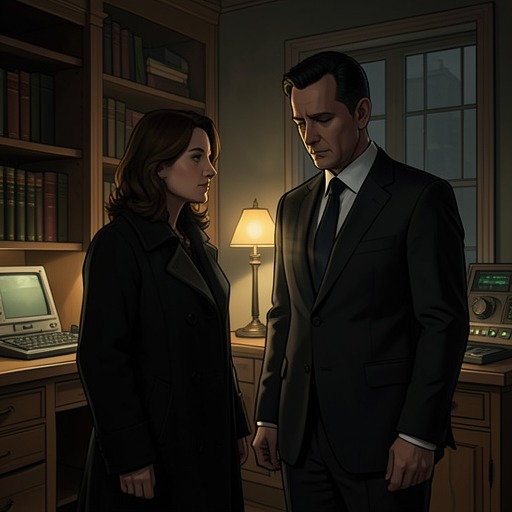
When Amaia shows Sara a photograph of Markina, Sara recognizes the man but calls him her husband. Amaia corrects her, saying that he is her son. Sara rejects the correction, insisting that she can distinguish her husband from her son; then, looking at the photograph again, she returns to the same identification. She praises his appearance and describes her love and desire for him as unforgotten, even though he never comes to visit. Her declaration ends in tears, as she says she still loves him despite believing that he no longer loves her.
The scene does not settle whether Sara is confusing the relationships, repeating a remembered identity, or expressing something more complicated about Markina. It does establish the emotional certainty of her attachment: she responds to the photograph with affection and longing, while Amaia’s correction cannot dislodge her account. The photograph becomes a focus for that contrast, placing the visible face of Markina before Sara while leaving the history behind it unsettled.
Afterward, Amaia asks the clinic for Sara’s admission record, information about who pays her expenses, and whether her son has visited. The staff member refuses to provide private records. Asked about Sara’s child, she says that, as far as she knows, Sara had only one baby, a girl who died. This answer introduces a second contradiction: the investigation has treated Markina as Sara’s son, but the clinic’s account names a deceased daughter as her only child. The evidence presented does not resolve the discrepancy.
Family History and the Investigation
Sara’s significance deepens as Amaia explains what the investigation has uncovered about the secret group active in Lesaka and Baztán in the late 1970s and early 1980s. A protected witness identifies Markina as the group’s spiritual leader and describes a human sacrifice: a newborn girl was offered at a farmhouse in Lesaka. The witness also says the group visited the separate community at Argi Beltz, where members were preparing an equivalent sacrifice, and identifies Amaia’s mother among that group’s members.
Amaia connects this history to the disappearance from the record of the Martínez Bayóns’ daughter, who supposedly died at fourteen months during a trip to the United Kingdom. The trip never took place, and there is no death certificate, autopsy report, burial record, or entry for the child in her parents’ passport. In the same account, Amaia recounts a father’s confession that he and his wife had given their first daughter to the practice, after which his wife suffered depression and could not love their later son. Amaia does not say aloud that she suspects Sara’s suffering arose not simply from bereavement but from guilt. The suspicion links Sara to the investigation’s account of sacrifice without turning that link into a settled explanation of her condition.
Narrative Role and Uncertainty
Sara’s appearances are brief, but each revises what the investigation seems to know. The file makes her a questionable entry in Markina’s biography; the clinic visit disproves the report of her death; her response to the photograph complicates the mother-son relationship; and the staff member’s account of a dead daughter opens a further gap in the family record. These pieces do not fit neatly together, and the novel leaves their discrepancies visible rather than supplying a complete explanation through Sara herself.
That uncertainty matters to the inquiry’s larger concern with children whose deaths or identities have been obscured. Sara is at once a patient whose recollections are unreliable as straightforward evidence and a person whom Amaia suspects may carry knowledge of an act that was never officially recorded. Her story therefore keeps the investigation’s central distinction in view: an account can be emotionally vivid yet factually unstable, while documentary absences may point toward a history deliberately hidden. Sara’s attachment to Markina and the unanswered question of the dead girl remain closely joined, but the evidence does not disclose the full nature of either.